
Far from the Road: A Community Health Project in the Himalayas
The inspiring and dramatic events in Far from the Road unfolded half a century ago in the verdant, idyllic valley of Dhorpatan, at 9,000 feet elevation in Nepal. Ross Anthony, from Oklahoma City, a returned agricultural Volunteer, conceived the project alongside Nepal’s first NGO, Paropakar. With passion and persistence, “Ross the Boss” cobbled together shoestring-level funding and signed up Mary Murphy, a community health educator from suburban Washington, D.C. They recruited Stephen Bezruchka, a Stanford Medical School grad from Toronto, and were later joined by Mike Payne, a water systems engineer from Cleveland, Ohio. With ponies and porters, the team...

Helicopters and The Himalayan Gourmet Cookbook
The word “gourmet” is not often associated with Peace Corps service, but if you were serving in the high Himalayas in the 1960s, you may have a different understanding of that term than most of us. Diana Oppedal (Nepal 1965–67) was 19, a recent high school graduate from Ames, Iowa, when she received her invitation to go to Nepal in 1965. Her parents weren’t pleased with the news and suggested she join the military, “but I wanted to join the Peace Corps, so off I went,” Oppedal said. Pretty soon she was in Kathmandu, supporting the Peace Corps medical office...
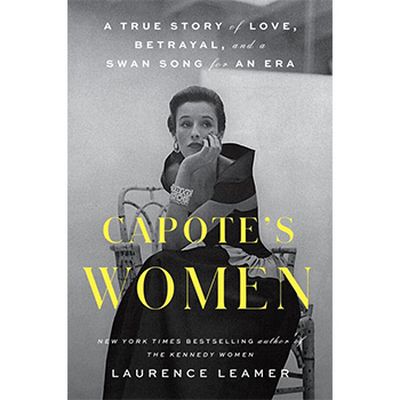
The Swan Song that Truman Capote Did Not Intend to Write
Capote’s Women: A True Story of Love, Betrayal, and a Swan Song for an Era By Laurence Leamer G.P. Putnam’s Sons Reviewed by Steven Boyd Saum “For years, Truman Capote had been proudly telling anyone within hearing that he was writing ‘the greatest novel of the age,’” begins Laurence Leamer’s latest biography, a tale of the literati and glitterati. Capote’s book “was about a group of the richest, most elegant women in the world. They were fictional, of course … but everyone knew these characters were based on his closest friends, the coterie of gorgeous, witty, and fabulously rich...

Peace Corps Achievements — June 2022
News and updates from the Peace Corps community — across the country, around the world, and spanning generations of returned Volunteers and staff. By Peter V. Deekle (Iran 1968–70) Jamie Hopkins, who served as a Volunteer in Ukraine 1996–98, leads the Eagan Community Foundation in Minnesota and spearheaded a three-day film festival in support of Ukraine in April and May. Krista Kinnard (Ecuador 2010–21) has been named a 2022 finalist for the Samuel J. Heyman Service to America Medal, for her work spearheading new, efficiency-boosting and cost effective technologies for the Department of Labor (DOL). Rob Schmitz (China 1996–98) had a stint as guest host of NPR’s All...
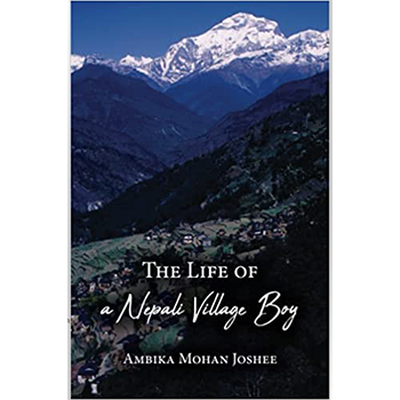
An Audience with the King
For 30 years Ambika Joshee worked for the Peace Corps in Nepal. His memoir, The Life of a Nepali Village Boy, is a candid account of a country being transformed — and traces a personal quest for knowledge, justice, and understanding. Here is an excerpt. An Audience with the King By Ambika Mohan Joshee Bandipur is seven kilometers south of Dumre Bazar, which is on the Kathmandu-Pokhara highway. It is a small hilltop settlement with a population of about 16,000. About 1,030 meters above sea level, on a saddle of the Mahabharat range, it is a beautiful town with old Newari architecture. Houses...
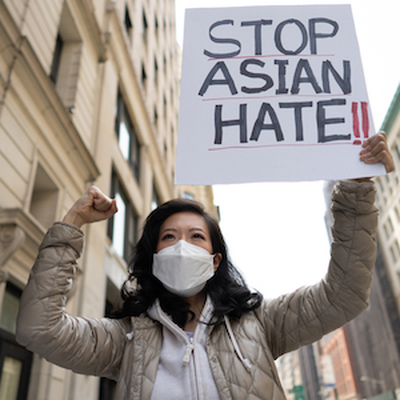
Learning History, Not Hate
Asian Americans and Pacific Islanders Leading in a Time of Adversity. A conversation convened as Part of Peace Corps Connect 2021. Image by Shutterstock Asian Americans and Pacific Islanders (AAPI) are currently the fastest-growing racial or ethnic group in the U.S., but the story of the U.S. AAPI population dates back decades — and is often overlooked. As the community faces an increase in anti-Asian hate crimes and the widening income gap between the wealthiest and poorest, their role in politics and social justice is increasingly important. The AAPI story is also complex — 22 million Asian Americans...
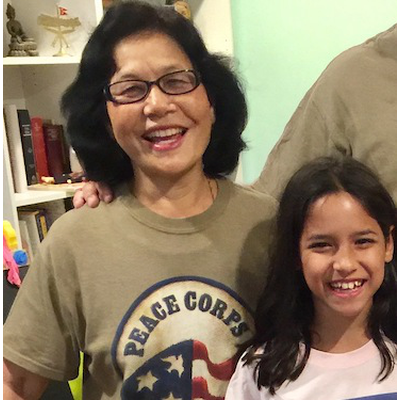
Our Stories are America’s Stories
In Moldova, my work partners and our host family weren’t expecting someone like me. Instead of being young and white, I was older and Asian. And born near Mount Everest. By Champa Jarmul When I was a girl growing up in Nepal, two of my teachers were Peace Corps Volunteers. After I became a teacher myself, I attended a training workshop with another Volunteer. Most important to me was the PCV who taught at our school a few years later. David and I fell in love and got married. More than 35 years later, after our two sons had...
We’ll Always Have Sefrou
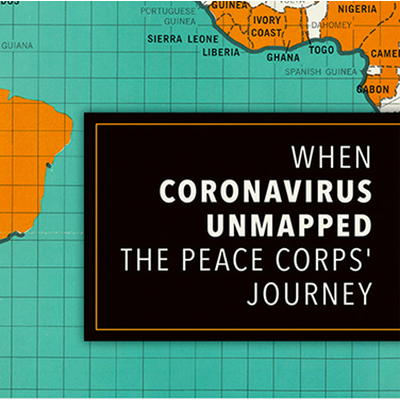
Evacuation, some Peace Corps history, and #apush4peace When Coronavirus Unmapped the Peace Corps' Journey Jeffrey Aubuchon (92252 Press) Reviewed by Jake Arce and Steven Boyd Saum In March 2020, the COVID-19 pandemic led to the unprecedented global evacuation of Peace Corps Volunteers. Jeffrey Aubuchon brings together stories of some evacuees chronicled in WorldView: Chelsea Bajek, who was working with a women’s group in Vanuatu; Jim Damico, evacuated from teaching in Nepal; Benjamin Rietmann, yanked from his work with farmers and young entrepreneurs in Dominican Republic; and Stacie Scott, who left behind the community she was serving as a health volunteer in Mozambique. Aubuchon follows...
Returning to Serve as a Peace Corps Volunteer a Second Time — 35 years Later
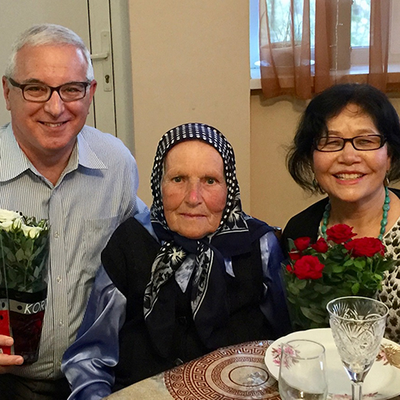
In the 1970s, David Jarmul served as a Volunteer in Nepal. More than three decades later, he and his wife, Champa, returned to serve in Moldova. Lessons and advice for experienced would-be Volunteers — and how they can make an impact. By David Jarmul Photos courtesy David Jarmul What’s it like to serve as a Peace Corps Volunteer in your twenties and then again decades later? David Jarmul takes a deep dive into that topic his recent book, Not Exactly Retired: A Life-Changing Journey on the Road and in the Peace Corps. He “teases out a striking contrast between his service in...
The West is Burning
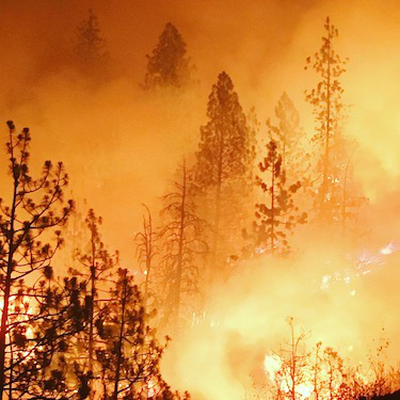
My first season as a wildland firefighter By Colin McLaren as told to Steven Boyd Saum Photo by Colin McLaren By October 2020, wildfires in the western U.S. burned an area larger than the state of New Jersey. A story from the front lines. Typically when we’re out on a fire, we work 16 hour days: up before six and finishing with a pretty late dinner — whenever the work is really done. But recently two of the fires we worked overnight, to 9 a.m. the next morning. We were on the Cold Creek Fire in Wenatchee, Washington. We went...