


The Stream: Spring/Summer 2026 – RPCV Book Reviews
RPCV BOOK REVIEWS

FEATURED REVIEW
We Called It a War
by Sargent Shriver
Shriver’s posthumous memoir—written in 1960 but only recently rediscovered in the archives of the Shriver Peace Institute and edited for contemporary readers—offers a detailed account of the 1964–68 War on Poverty. The narrative illuminates Shriver’s political acumen, details with equanimity his relationships with allies, adversaries, and leading figures of this time—most notably LBJ—and displays the strong spiritual fidelity with which he appears to have approached everything.
Among the memorable anecdotes of his efforts to make a meaningful impact on poverty in the U.S. is one in which Shriver describes prowling Capitol Hill “like a junk dealer, trying to find out which programs, now considered dead, might be revitalized and which, with no individual hope of congressional approval, might have a chance if they were incorporated into our omnibus anti-poverty legislation.”
Shriver’s memoir—indeed his whole career—offers lessons on the deployment of brute power abroad versus pragmatic idealism at home. The book feels newly relevant at a moment when America’s widening inequality once again raises difficult questions about power, politics, and public purpose, especially if the country ever decides to seriously reckon with the growing gulf between the billionaire class and everyone else.
Ben East (Malawi 1996–98)
MEMOIRS
Born in Kansas, but Made in Africa: An American Man’s Recollections of 50 Years in Africa
By Mark Wentling (RPCV Honduras 1967–69, Togo 1970–73); (Staff: Togo, Gabon, Niger 1973–77)
A sweeping memoir chronicling five decades across 54 African nations, this book is built from a chronologically organized series of vignettes, each capturing a moment, lesson, or cultural encounter that shaped Wentling’s evolution from Peace Corps Volunteer to senior development professional. Many stories describe the improvisational resilience familiar to Peace Corps Volunteers—unexpected ceremonies, bewildering bureaucracies, and the quiet generosity of villagers who became teachers, friends, and family.
Wentling writes candidly about the relationships that anchored him, including the story of how he met his African wives—told with the same humility and cultural sensitivity that characterizes the rest of the book. These personal moments never drift into sentimentality; instead, they illuminate the human connections that shaped his understanding of belonging.
Mark Walker (Guatemala 1971–73)
The Joyous Fort, Our Homeland in Thini: Origins and Traditions of a Thakali Family
by Renée Thakali (Nepal 1977–79) and Pratikshya Thakali
Renée, a Peace Corps Volunteer in Nepal (1977–79), and Pratikshya, her relative by marriage, dive deep into the history, geography, traditions, kinship relationships, and religions of the Thakali people as experienced in Thini, an isolated Nepalese village in the Annapurna range halfway between India and Tibet.
After Renée’s marriage to Aita, a local schoolteacher, she becomes part of his large extended family and adopts many of the community’s customs. Stories, music, food, and important rituals are explained in compelling detail, thanks to the contributions of her co-author, a local born and raised in Thini. The sociological underpinnings of this authentic Himalayan village will interest those curious about the past, present, and future of one of the world’s hidden places, not frequented by tourists.
Evelyn Kohl LaTorre (Peru 1964–66)
A Snowflake in the Jungle: My Two Years in the Peace Corps
by James Jablonski (Nigeria 1964–66)
This memoir of one Volunteer’s service in Nigeria reads less like a snapshot than a feature-length film. Jablonski, the only white resident in the village of Affa—a detail that inspired the book’s title—was tasked with building a cooperative vegetable business from the ground up.
The memoir traces the challenges, frustrations, and small victories of the effort, while also capturing the uncertainty Volunteers often feel about what remains after they leave. In this case, history intervened tragically: Nigeria’s civil war would later devastate Biafra and destroy Affa itself.
Robert Gribbin (Kenya 1968–70)

Star’s War: George Clooney on the Frontlines of a Deadly African Conflict
by Matt Brown (Guinea 2001–03)
Matt Brown is living proof that the Volunteer experience can prepare a person for just about anything. After his Peace Corps service, he worked as a communications specialist for the Enough Project and led three trips to South Sudan and Sudan with actor George Clooney to produce documentary videos aimed at drawing attention to human rights abuses.
At its core, Star’s War reminds us that witnessing injustice comes with risk and responsibility. Clooney’s fame becomes less a spotlight than a tool for forcing the world to pay attention. Brown also captures the emotional toll of that work—the exhaustion, grief, and frustration of trying to help amid seemingly endless violence. At the same time, the book offers a rare behind-the-scenes look at the uneasy intersection of celebrity activism, journalism, and modern conflict reporting.
Dan Campbell (El Salvador 1974–77)
Hustle: The Making of a Freelance Writer
by Lawrence Grobel (Ghana 1968–71)
Grobel is best known as “the interviewer’s interviewer,” a title given to him by Playboy magazine after his landmark interview with Marlon Brando. His reputation rests on long-form, probing conversations with cultural icons such as Barbra Streisand, Al Pacino, Saul Bellow, and Truman Capote, and set the gold standard for celebrity journalism in the late 20th century.
Joyce Carol Oates once called him “the Mozart of interviewers,” underscoring his mastery of the form. More than a memoir, this book is a blueprint for survival in the precarious world of freelancing. Grobel’s reflections are candid, instructive, and deeply human, offering aspiring writers a rare glimpse into the craft and lifestyle of one of journalism’s most accomplished practitioners.
Mark Walker (Guatemala 1971-73)
POLITICS
Beyond the Politics of Contempt
by Doug Teschner (Morocco 1971–73), Beth Malow, and Becky Robinson
This collaborative book is a pep talk urging U.S. citizens to treat with dignity and respect those whose political views differ from their own. In five sections, the book explores the roots of unhealthy conflict, how what they term “the exhausted majority” can instigate change, and the possibility that healthier civic life begins with individuals changing their own behavior first. Rather than offering sweeping political solutions, the book focuses on the smaller, harder work of rebuilding trust in everyday American life. Teschner is profiled earlier in this issue on page 45.
Evelyn Kohl LaTorre (Peru, 1964–66)
Profiles in Service: Peace Corps Roots in American Diplomacy
by Ben East (Malawi 1996–98)
Echoing the spirit of John F. Kennedy’s Profiles in Courage, Ben East’s Profiles in Service traces the journeys of 14 Peace Corps Volunteers who later rose to the rank of ambassador in the U.S. Foreign Service.
The profiles themselves are the heart of the book, following Volunteers from their service years into diplomatic careers shaped by cross-cultural experience. East, himself an RPCV and Foreign Service officer, also weaves in his own reporting journey as he supplements oral histories with contemporary interviews.
Clifford Garstang (South Korea 1976–77)
Presented in partnership with Peace Corps Writers. Read the full reviews at peacecorpsworldwide.org



Related Articles

On the Road to Kinale
A former Peace Corps Volunteer recalls a visit to Kinale, Kenya, where a fall on a muddy road led to…
The Longest Extra Time
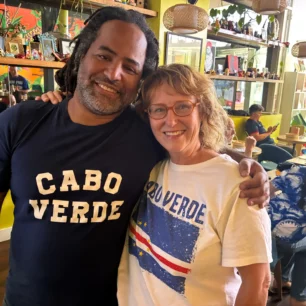
Thirty-five years after teaching English as a Peace Corps Volunteer in Cape Verde, Jill Tucker unexpectedly crossed paths with one…

Peter Pan Syndrome
As young idealists, we penetrated local society and understood day-to-day life in ways that neither Foreign Service diplomats nor graduates…

Carrying the Torch of Liberty
In the early 1960s, during the Pan American Games, a major international sporting event held every four years, my father…