

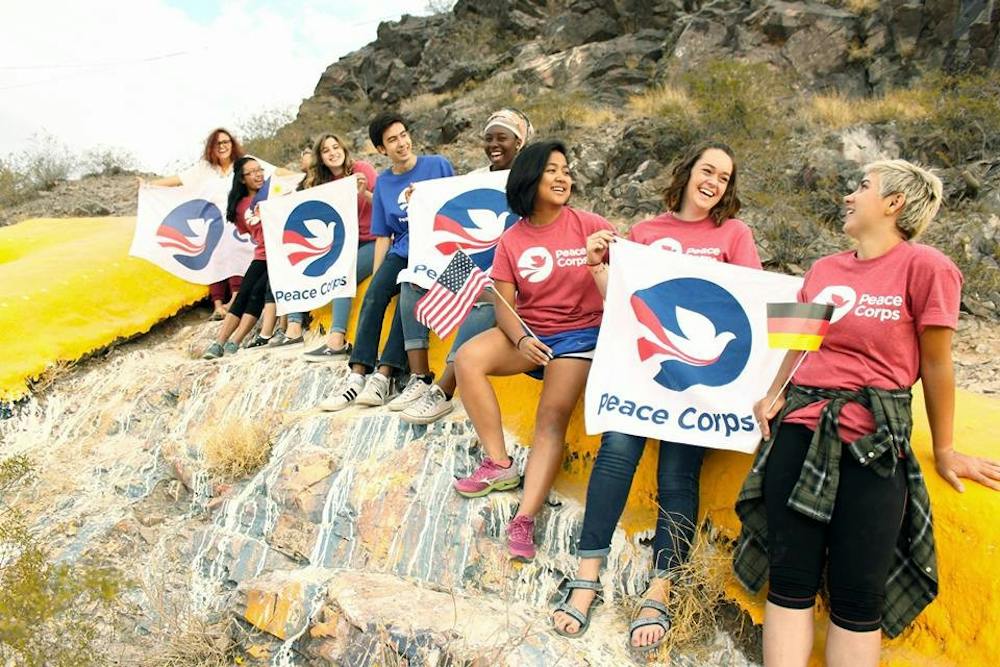
RPCV Campus Ambassadors
A New Role in Peace Corps Recruitment
As every student knows, getting accepted to your chosen program is the first hurdle. Paying for it, though, can be an even more significant hurdle. The Peace Corps is launching a new opportunity to offer students at campuses everywhere an opportunity to earn some money while promoting the values of service and volunteering abroad.
Campus Ambassadors, as they are called, receive a $1,600 per-semester stipend for their work, and gain real-world experience networking, event planning, and public speaking. And, RPCVs are the applicants best positioned to bring authenticity to the recruitment effort.
As Lauren Benitez, a current RPCV Campus Ambassador at Notre Dame put it: “I encourage students and prospective applicants to ask themselves difficult questions, deeply engaging with their ‘why’ behind service,” she said. “Success as a Peace Corps Volunteer is not always quantifiable. This is a message I try to communicate to all the students I talk to: Projects completed or grant money received do not determine success. Rather, it’s the people you meet and the connections formed through learning a new language and understanding a new culture.”
 “As a Peace Corps Volunteer, you are an ambassador of the United States,” she added, “and often many people’s first or only interaction with an American. To serve this role well, we need only the most qualified who have thoughtfully considered what it means to serve abroad.”
Andrew Wilson, Chief of Recruitment, Outreach and RPCV Engagement for the Peace Corps, describes the ambassadors as an essential link in bringing awareness of the program to new audiences.
“The Campus Ambassador Program strengthens college and university partnerships and helps more students learn about international service opportunities through trusted peer-to-peer outreach,” he said. “In 2026, the program was expanded to include Returned Peace Corps Volunteers, whose authentic stories of service can help students better understand the experience and envision their own path to service. Together, these efforts broaden awareness, deepen campus engagement, and contribute to a global service-oriented student body.”
Volunteers will also appreciate the free-form structure of the ambassadorship, which encourages students to lead and innovate campus connections themselves. Ambassadors are expected to work about five hours per week promoting Peace Corps values and stories.
Nathalie M. Kwon is a Seoul-based journalist and researcher, currently serving as an Editorial Fellow at WorldView Magazine.


Related Articles

Think Fulbright is Just for Students? Think Again.
Did you know that you don’t need to be enrolled in graduate school to become a Fulbright scholar? For people…


Why HBCUs Belong on Your Grad School List
One of the first things prospective students should understand is that there is no single HBCU graduate school experience. There…
Your Next Adventure Comes With a Degree
From Cairo to Central Europe, RPCVs are taking their education overseas—and discovering that a graduate degree abroad can open doors…