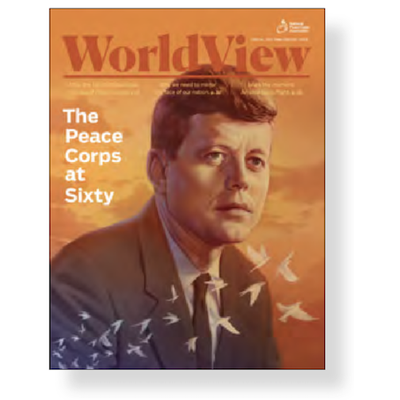
Letters: Readers Respond to the Special 60th Anniversary Edition of WorldView
Letters, emails, LinkedIn and Instagram comments, Facebook posts, tweets, and other missives. We’re happy to continue the conversation here and on all those nifty social media platforms. One way to write us: worldview@peacecorpsconnect.org Thanks to NPCA as We Return to Service As we prepare to return to Zambia in May 2022, we want to say thank you to each of you (and all of the NPCA staff/interns) for your continued support of us — first, as many of you are RPCVs yourself, and then advocates for Peace Corps even before our service, and throughout our first service, and then as evacuees, and...
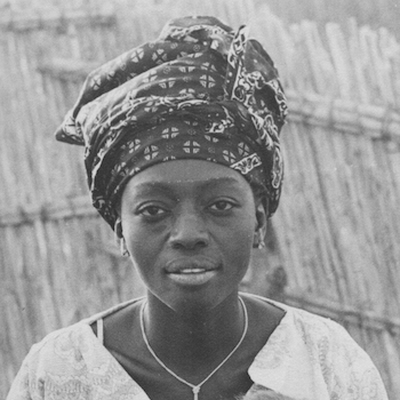
An Affectionate Portrait of a Town in Senegal from Half a Century Ago — and an Invitation from the President to Return
Peace Corps Senegal 1968–70 By Carolee Buck. Photography by Carolee and Art Buck Independently Published Photo: M'Bayang, one of the women who was part of the social center in Fatick Reviewed by Steven Boyd Saum Carolee Buck professes to be a reluctant author and makes no claim to be a storyteller. It took the coaxing of fellow returned Volunteers in Oregon for her to chronicle her Peace Corps service in Senegal 1968–70, together with husband Art. In a project rich with Art’s photography, she offers an affectionate portrait of the people and community of Fatick, then a town of about 4,000...

Peanut Flour, Peace Corps, and the President
In 1967, Jack Allison wrote and recorded a song that went on to be the No. 1 hit in Malawi for two years running. Then the president kicked him out of the country. 45 RPM: “Ufa Wa Mtedza (The Peanut Flour Song)” — No. 1 in Malawi 1967–70. Photo courtesy Jack Allison The Warm Heart of Africa An Outrageous Adventure of Love, Music, and Mishaps in Malawi By Jack Allison Peace Corps Writers Jack Allison served as a Volunteer 1967–69 in Malawi, a country known as “The Warm Heart of Africa.” While there, he wrote and recorded the number...
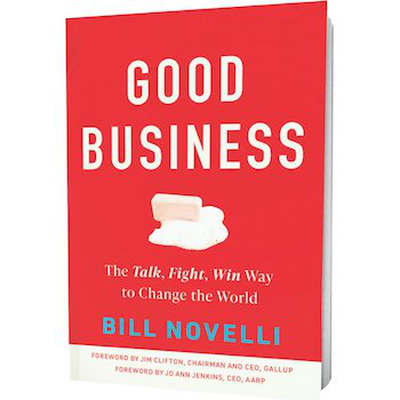
He Started Out Selling Soap. And Went On to Found the Campaign for Tobacco-Free Kids.
Good Business The Talk, Fight, Win Way to Change the World By Bill Novelli Johns Hopkins University Press Reviewed by Steven Boyd Saum Bill Novelli’s career includes serving as CEO of AARP, founding the Campaign for Tobacco-Free Kids, leading the humanitarian organization CARE, and establishing global PR agency Porter Novelli. He teaches in the MBA program at McDonough School of Business at Georgetown University. In Good Business, he offers lessons on life and leadership. He got his start in the corporate world with Unilever, selling soap. Next stop: a New York ad agency, where he sensed a kind of...

For “Hardball” Host Chris Matthews, a Life in Politics Began with the Nixon-Kennedy Battle in 1960
This Country My Life in Politics and History By Chris Matthews Simon & Schuster Reviewed by Steven Boyd Saum “I suppose everyone has a moment that wins them over to a lifelong enthusiasm,” Chris Matthews writes early on in This Country. “For me, it was the 1960 battle between Vice President Richard Nixon and Senator John F. Kennedy that got me truly excited about politics.” Matthews was 14, and from an Irish Catholic family in Philadelphia. He fell hard for JFK — at first. But his was a Republican family. Come GOP convention time, young Chris had swung around to his...
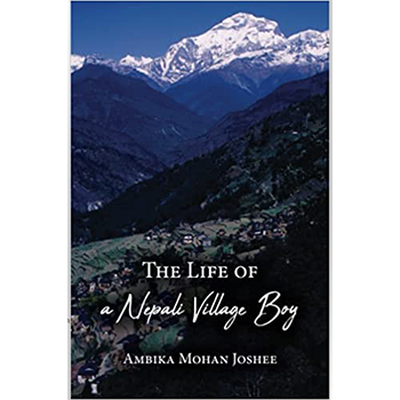
An Audience with the King
For 30 years Ambika Joshee worked for the Peace Corps in Nepal. His memoir, The Life of a Nepali Village Boy, is a candid account of a country being transformed — and traces a personal quest for knowledge, justice, and understanding. Here is an excerpt. An Audience with the King By Ambika Mohan Joshee Bandipur is seven kilometers south of Dumre Bazar, which is on the Kathmandu-Pokhara highway. It is a small hilltop settlement with a population of about 16,000. About 1,030 meters above sea level, on a saddle of the Mahabharat range, it is a beautiful town with old Newari architecture. Houses...
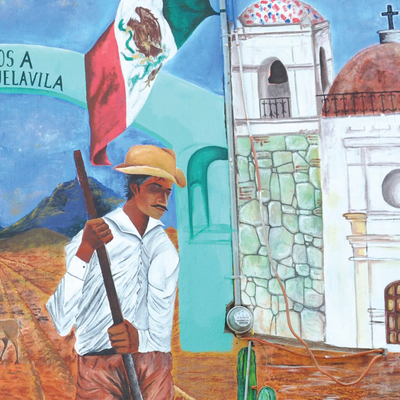
On the Plain of Snakes
In the mountains near Oaxaca, tales of El Norte: among weavers and migrant workers who left family and home for work across the border — and returned. Conversations from a time before COVID. By Paul Theroux On a sojourn in pursuit of understanding, writer Paul Theroux set out five years ago to travel the length of the U.S.–Mexico border. Then he drove his old Buick south, visiting villages along the back roads of Chiapas and, here, a mountain town near Oaxaca. An excerpt from On the Plain of Snakes: A Mexican Journey. In the small Zapotec-speaking town of San...
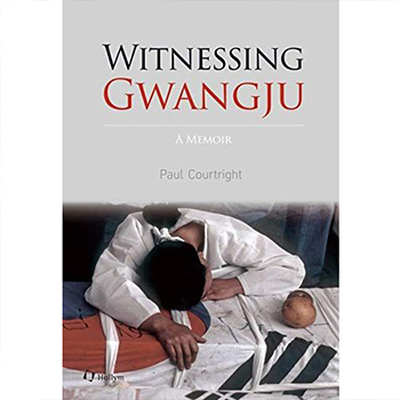
How the May 1980 Democratic Uprising in South Korea Was Met with Brute Force: A First-Person Account
Witnessing Gwangju By Paul Courtright Hollym Publishers Reviewed by Steven Boyd Saum Paul Courtright arrived in South Korea in 1979 to serve as a Peace Corps Volunteer, based in a community near the southern tip of the Korean peninsula. He worked with patients afflicted with Hansen’s disease, also known as leprosy. On May 19, 1980, on his way through the bus terminal in the provincial capital of Gwangju, he saw a young man being beaten by military special forces. A phone call to another Volunteer confirmed: “Something big” was going down in the city — part of a mass...
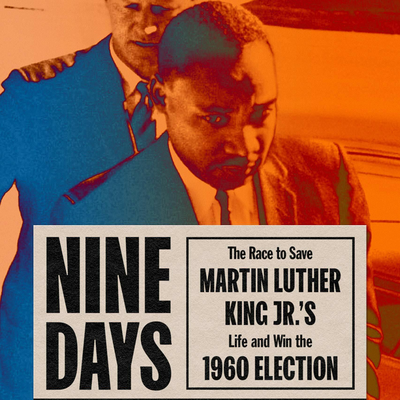
When Martin Luther King Jr. Was Arrested for Taking Part in a Student-Led Sit-In in Atlanta, It Could Have Cost Him His Life.
Nine Days The Race to Save Martin Luther King Jr.’s Life and Win the 1960 Election By Stephen Kendrick and Paul Kendrick Farrar, Straus and Giroux Reviewed by Steven Boyd Saum In October 1960, days after presidential candidate John F. Kennedy delivered an impromptu address at the University of Michigan that would spark the creation of the Peace Corps, a series of events were set in motion that loom large in the history of the civil rights movement. They arguably changed the course of the presidential election as well. On October 19, Martin Luther King Jr., at the urging of student...
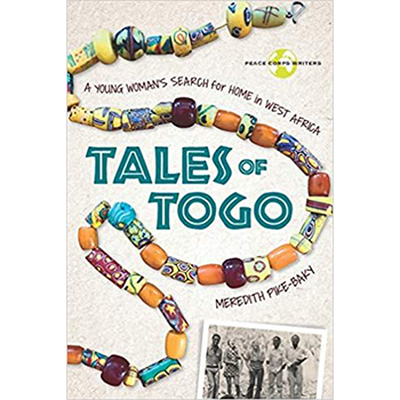
Understanding a New Meaning of Home
Tales of Togo A Young Woman’s Search for Home in West Africa By Meredith Pike-Baky Peace Corps Writers Reviewed by Bill Preston This candid and heartfelt memoir chronicles the twists and turns, the ups and downs, and the sometimes sideways arc of Meredith Pike-Baky’s time teaching English and living in Togo in the early 1970s. Eager to escape political turmoil in the U.S., she finds in Togo a nation “in the beginning stages of delayed independence, having declared an end to French rule a decade earlier ... on the threshold of a new era, a heady, hopeful time for both...